
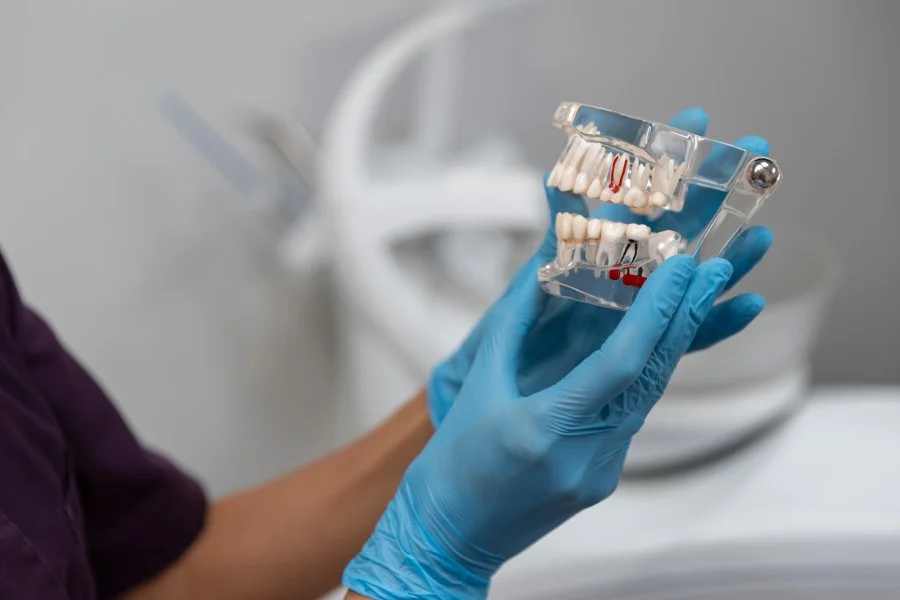
Missing teeth change how you chew, speak, and maintain your oral health. A Dental Implant in Greater Noida West can offer a reliable replacement option for missing teeth. However, before placing an implant, your dentist must carefully evaluate the health and quantity of your jawbone.
Dental implants need a stable foundation. Therefore, healthy bone plays a central role in supporting the implant and helping it function properly over the long term. Understanding this connection can help you make informed decisions before starting treatment.
For fast information, contact us on WhatsApp.
Bone health matters before dental implant treatment because the jawbone provides the foundation that supports the implant. If the bone is too thin, weak, or insufficient in volume, the implant may not receive adequate support. Ministry of Dentistry can determine whether implant placement is suitable or whether procedures such as bone grafting may be required.
Why the Jawbone Is Important for Dental Implants
A dental implant is a small biocompatible post that is surgically placed into the jawbone to replace the root of a missing tooth. Over time, the surrounding bone can integrate with the implant through a biological process known as osseointegration.
For this reason, implant treatment depends on more than simply having an empty space where a tooth once existed. The jawbone should have sufficient height, width, density, and overall health to support the planned implant.
When the bone provides a stable foundation, the dentist can plan the position and angle of the implant more accurately. This also supports proper function and helps create a restoration that fits naturally with the surrounding teeth.
How Missing Teeth Can Affect Bone Health
The jawbone receives stimulation when you bite and chew. After a tooth is lost, the area no longer receives the same level of stimulation. As a result, bone volume can gradually decrease over time.
The amount and speed of bone loss can vary from person to person. Several factors may influence it, including:
- How long the tooth has been missing
- The location of the missing tooth
- Gum and periodontal health
- Previous infection or trauma
- Overall oral hygiene
- Smoking or tobacco use
- Certain medical conditions and medications
Therefore, delaying replacement of a missing tooth may sometimes make future implant planning more complex. This does not mean that every person who has had a missing tooth for years cannot receive an implant. Instead, it highlights the importance of a detailed assessment.
What Does Good Bone Quality Mean?
Dentists do not evaluate jawbone health based on one factor alone. A thorough assessment may consider several characteristics.
Bone Volume
There must be enough bone in the correct area to support the planned implant. If the jawbone has become narrow or reduced in height, the available space may affect treatment planning.
Bone Density
Bone density refers to how compact or strong the bone structure appears. Different areas of the mouth naturally have different bone characteristics. Your dentist considers these differences while selecting the implant size, position, and treatment approach.
Bone Shape and Position
The shape of the jawbone also matters. Nearby structures, including the maxillary sinus in the upper jaw and nerves in the lower jaw, must be considered during planning.
This is why an experienced dental professional should assess each case individually rather than following a one-size-fits-all approach.
How Dentists Evaluate Bone Before Implant Treatment
Before recommending a Dental Implant in Greater Noida West, a dentist usually carries out a detailed examination and treatment-planning process.
The assessment may include:
- A clinical oral examination
- Dental X-rays
- 3D imaging, such as CBCT, when clinically appropriate
- Evaluation of the gums and surrounding teeth
- Review of the missing tooth area
- Assessment of bite and available space
- Review of medical and dental history
Three-dimensional imaging can help the dentist understand the amount and shape of available bone and identify important anatomical structures. This information supports safer and more precise treatment planning.
However, not every patient requires the same imaging or procedure. The dentist selects investigations according to the individual’s clinical needs.
When Is Bone Grafting Needed?
Bone grafting may be recommended when there is not enough healthy bone to provide suitable support for an implant. The purpose is to rebuild or preserve bone in the treatment area.
Depending on the case, the dentist may recommend:
- Socket preservation after tooth extraction
- Localized bone grafting
- Ridge augmentation
- Sinus lift procedures for selected upper-jaw cases
The treatment approach depends on the location and extent of bone loss. Some patients can receive an implant after a healing period, while others may qualify for a different treatment sequence.
It is important to understand that bone grafting does not automatically mean implant treatment is complicated or unsuitable. Instead, it can be part of a carefully planned approach to create better conditions for implant placement.
Gum Health Also Supports Implant Success
Bone health and gum health are closely connected. Active gum disease can damage the tissues surrounding natural teeth and may contribute to bone loss.
Before implant treatment, dentists often check for signs such as bleeding gums, inflammation, infection, or periodontal disease. Treating active oral problems first can help create a healthier environment for future treatment.
Good oral hygiene also remains important after implant placement. Although an implant cannot develop a cavity like a natural tooth, the surrounding gums and bone still require regular care.
Is Dental Implant Treatment Possible with Bone Loss?
In many cases, yes. Bone loss does not always rule out implant treatment.
Modern implant dentistry offers several options for managing different bone conditions. The best solution depends on factors such as the amount of remaining bone, the location of the missing tooth, gum health, bite forces, and overall medical history.
Some people may need a bone graft. Others may qualify for alternative implant sizes, positions, or treatment techniques. Therefore, an in-person examination is essential before making assumptions about eligibility.
Other Factors That Affect Implant Planning
Bone health is essential, but it is only one part of the treatment plan. Your dentist may also consider:
Overall Health
Certain medical conditions can influence healing and treatment planning. It is important to share your complete medical history and current medications with the dental team.
Smoking and Tobacco Use
Smoking and tobacco use can negatively affect oral tissues and healing. Dentists may advise patients to reduce or stop tobacco use before and after treatment.
Oral Hygiene Habits
Daily brushing, cleaning between teeth, and attending professional dental check-ups can help protect the gums and tissues around implants.
Bite and Teeth Grinding
Excessive bite forces or teeth grinding can place additional stress on dental restorations. Your dentist may recommend specific protective measures if needed.
Choosing the Right Time for a Dental Implant in Greater Noida West
The best time to explore implant treatment depends on your individual oral condition. After tooth loss, early consultation can help a dentist assess the area and discuss options for preserving or rebuilding bone when appropriate.
If a tooth was lost months or even years ago, it is still worth seeking an evaluation. Many people with reduced bone volume remain suitable candidates after proper treatment planning.
A professional consultation can provide clarity about:
- Whether enough bone is available
- Whether grafting may be necessary
- Which implant approach may suit your condition
- The expected treatment stages
- Healing and aftercare requirements
How to Protect Your Jawbone and Oral Health
While some causes of bone loss cannot be completely prevented, good oral care can help reduce avoidable risks.
Consider these practical steps:
- Replace missing teeth after discussing suitable options with your dentist
- Treat gum disease promptly
- Brush twice daily with proper technique
- Clean between teeth regularly
- Avoid smoking and tobacco use
- Attend routine dental examinations
- Follow your dentist’s recommendations after tooth extraction or implant treatment
Early attention to oral health often gives patients more treatment options.
Conclusion
Healthy jawbone structure provides the support needed for successful and well-planned implant treatment. The amount, density, and shape of the bone can all influence how your dentist approaches the procedure. Gum health, bite forces, medical history, and oral hygiene also play important roles.
If you are considering a Dental Implant in Greater Noida West, a detailed dental evaluation is the best first step. Ministry of Dentistry can assess your bone health, explain whether additional procedures may be helpful, and create a treatment plan based on your individual needs. Contact the dental team at Ministry of Dentistry to schedule a consultation and discuss the most suitable options for restoring your missing teeth and improving your oral function.